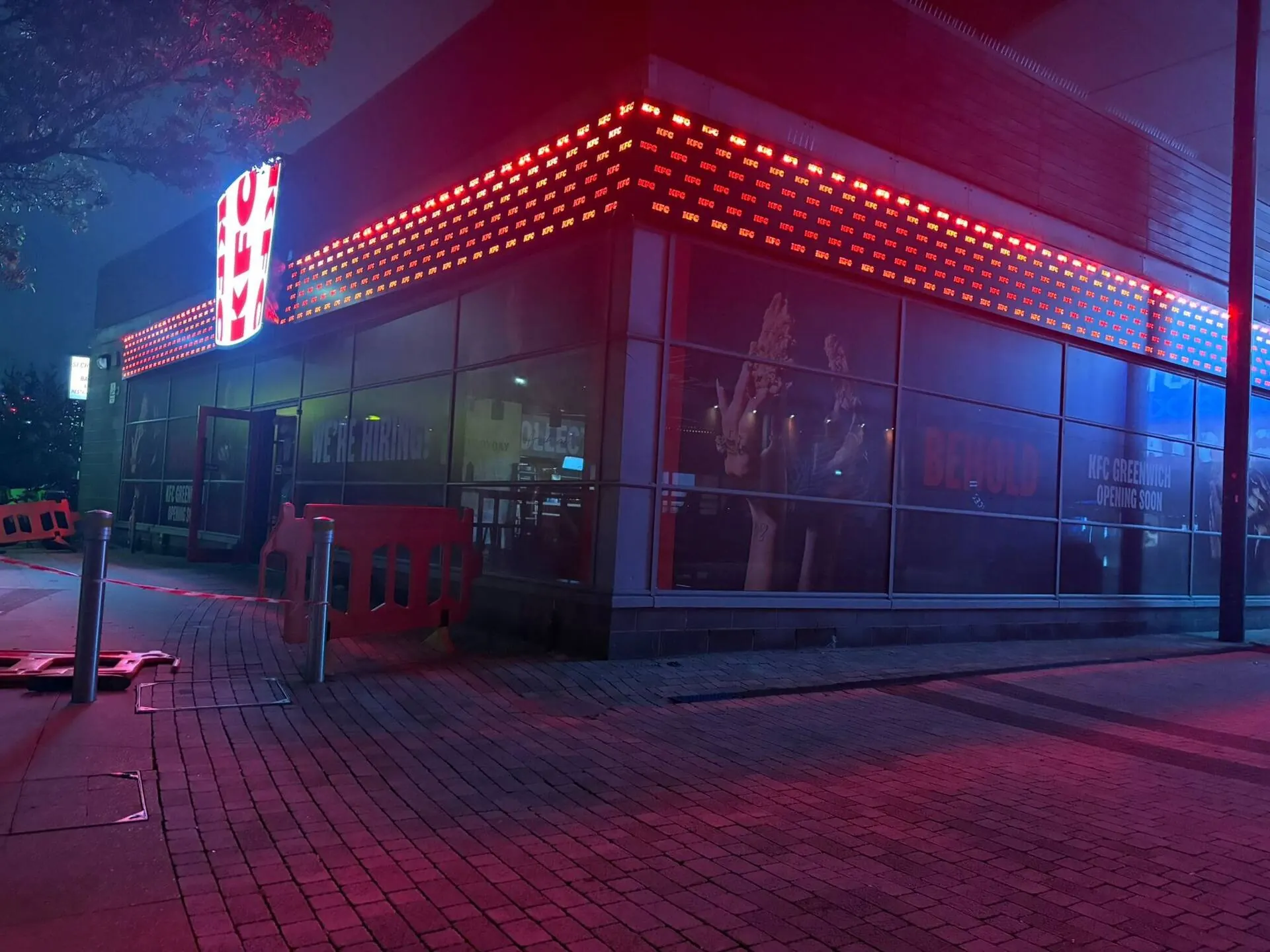
01 / South London context
High-street retail, hospitality, offices, trades and multi-site commercial premises
South London combines dense town centres, neighbourhood high streets, railway hubs, industrial estates and expanding commercial districts. Each setting creates different requirements for visibility, scale, lighting and access, so signage is planned around the real frontage, audience and route to the premises.
London Signage supports South London businesses with a coordinated service covering design development, material specification, manufacture and installation. Projects range from shopfront signs and illuminated lettering to window graphics, wayfinding, print and commercial vehicle branding.
02 / Uses in South London
Where this service fits
Typical applications include restaurant fascias, retail names, reception features and identification for businesses that trade into the evening. Face-lit letters give a direct luminous face, halo-lit letters wash light onto the backing surface, and light boxes suit compact logos or changeable display areas.
For a South London project, those options are assessed against the premises, the audience described in the brief and the local commercial setting above. We do not assume that a format suited to one frontage, interior or vehicle will suit another.
03 / Materials and finishes
Specified for the application
Built-up aluminium or stainless-steel letters can be paired with opal acrylic faces and LED modules. Aluminium trays, acrylic panels, tensioned faces, transformers and cable routes are specified together so the visible sign and its electrical components form one practical system.
04 / Production
How illuminated signs are made
Artwork is checked for minimum stroke widths and the space required for LEDs, returns and fixings. Letter shells or trays are fabricated, faces are cut, LED modules are laid out for even coverage, and the assembled sign is tested before dispatch.
05 / Delivery and installation
Fitting this service in South London
Installation planning must confirm the wall construction, cable path, isolation point, access equipment and location of power supplies. Fixing templates help position separate letters consistently, while trays or rails can reduce the number of penetrations into a frontage.
Installation across South London is organised around site access, parking or loading, trading hours and the condition of the fitting surface. Surveys and supplied site information are used to confirm dimensions, fixing methods, working height and any electrical requirements before manufacture.
06 / Durability and care
A finish made for daily use
Accessible power supplies make future maintenance simpler. Faces and returns should be cleaned gently, and any loss of illumination should be investigated rather than left to place extra load on the remaining components.
07 / Coordinated project delivery
One point of contact from brief to completion
Keeping design, production and fitting coordinated makes it easier to manage decisions and deadlines. Send the service required, delivery or installation address, approximate sizes, photographs, artwork and target date when requesting a quotation. We can then identify missing information and recommend the next practical step.
Businesses often combine illuminated signs with window graphics, internal signs, printed displays or vehicle branding. The related links below connect to dedicated South London pages so complementary services can be reviewed without leaving the same local service group.
For the most accurate quotation, include the quantity, approximate dimensions, preferred finish, installation address and any deadline that affects production. Clear photographs should show the full frontage, vehicle or fitting area as well as close views of the surface. If landlord approval, access permission or an electrical connection is still being arranged, mention this at the beginning. These details help us separate confirmed requirements from optional items, explain assumptions clearly and provide a proposal that can be compared against the finished scope of work. This preparation also helps identify decisions that can be confirmed later without delaying artwork, material ordering, manufacturing or the agreed installation programme.