
Education / Wayfinding Signs

Wayfinding Signs
for Education.

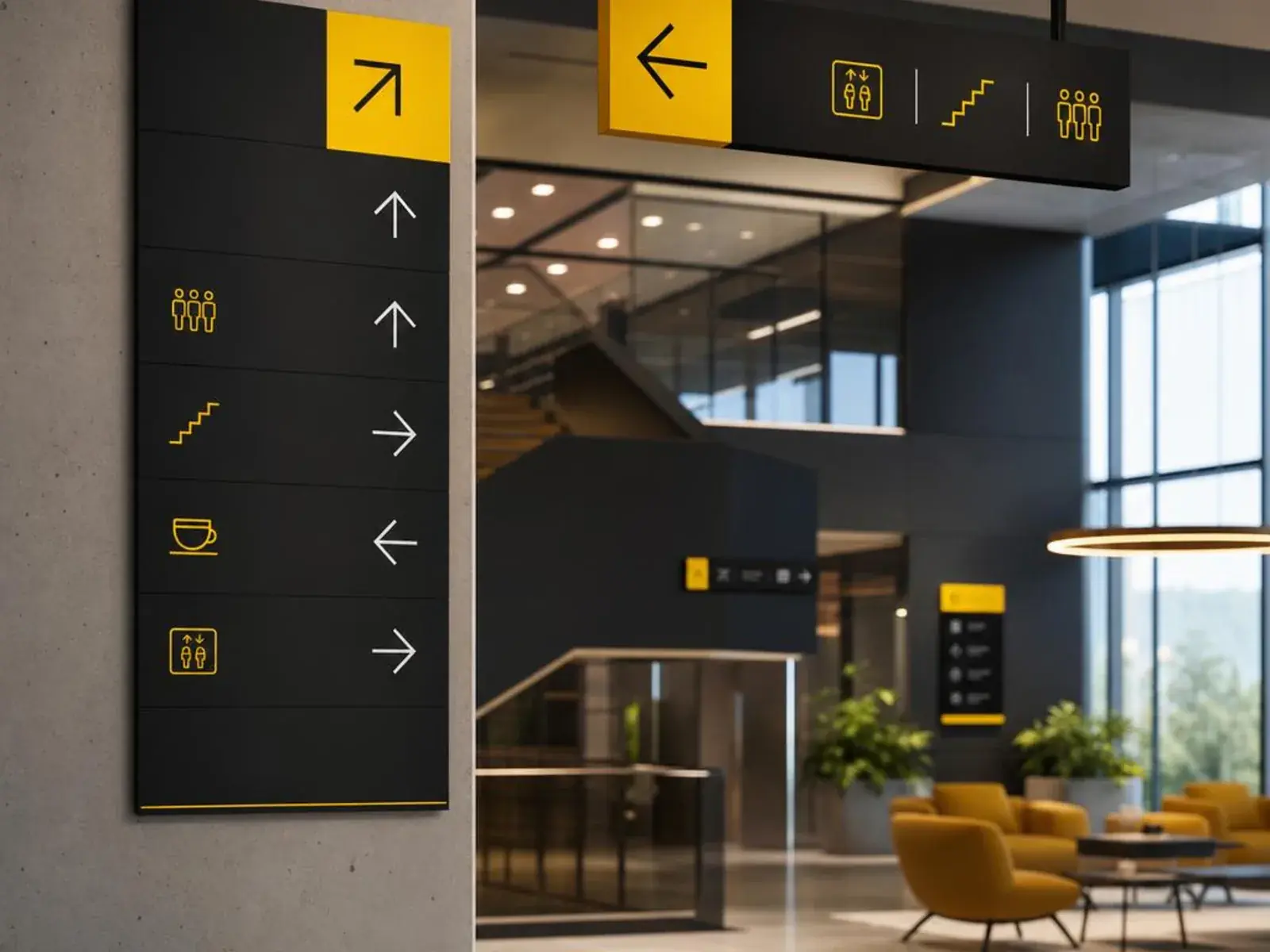
Readable campus information for varied audiences. Wayfinding signs form a connected information system rather than a set of isolated panels. Names, arrows, numbering and decision points need a consistent hierarchy that helps first-time visitors recover if they take a wrong turn.

The application

Where it earns its place.

Entrance, room and directional signs should form a consistent system that helps unfamiliar visitors navigate without guessing. Directories, entrance markers, wall signs, suspended signs and door identification can guide people through offices, estates, healthcare settings and multi-unit commercial sites. Temporary routes may need inserts or updateable panels.

Teaching spaces, corridors, shared entrances and events have different viewing distances and update needs.

Example of wayfinding signs materials and finish
Illustrative example of wayfinding signs; this is not presented as a documented education installation.
From brief to upkeep

Details make the difference.

Material choice, fixing and care should follow the conditions of your actual premises.

01 / 04

Specify

Survey the proposed sign position and viewing distance before confirming dimensions and fixings. Powder-coated aluminium, acrylic, printed vinyl, interchangeable slats and freestanding structures support different update cycles. Contrast, type size, glare and mounting height are considered alongside the visual finish.

02 / 04

Produce

A sign schedule links every message to a location and sign type. Copy, arrows and numbering are proofed as a complete family, then panels are batched and labelled so installation follows the intended route.

03 / 04

Install

Arrange any site survey and fitting with the institution, safeguarding arrangements, term dates and permission to enter occupied spaces. A site walk identifies actual decision points, sightlines and obstructions. Installation should follow the sign schedule in sequence, with final checks made from a visitor’s direction of travel rather than only from the wall face.

04 / 04

Look after it

Directories and tenant information benefit from replaceable elements. Keeping the message schedule current prevents old and new signs from creating contradictory routes.

Example of a printed venue map on a rigid display board
Illustrative signage example for discussing the education environment; not a documented sector-specific installation.
Think beyond one surface

See the whole setting.

Education environments may need to guide pupils, students, staff, families and visitors through different entrances. Age-appropriate legibility, changeable notices and safe installation are more useful than decorative copy alone.

Entrance, room and directional signs should form a consistent system that helps unfamiliar visitors navigate without guessing.

All Education options
Tell us about your space

Ready to put it in place?

Tell us about your education site and what you need from wayfinding signs. We can discuss size, finish, access and timing before quoting.

Get a quote
Chat on WhatsAppUsually replies quicklyCall now020 8004 6934Contact usTell us about your project