Van Graphics
A Guide to Van and Vehicle Graphics
Plan clear vehicle graphics that suit the van, share the right message and stay practical for your working day.
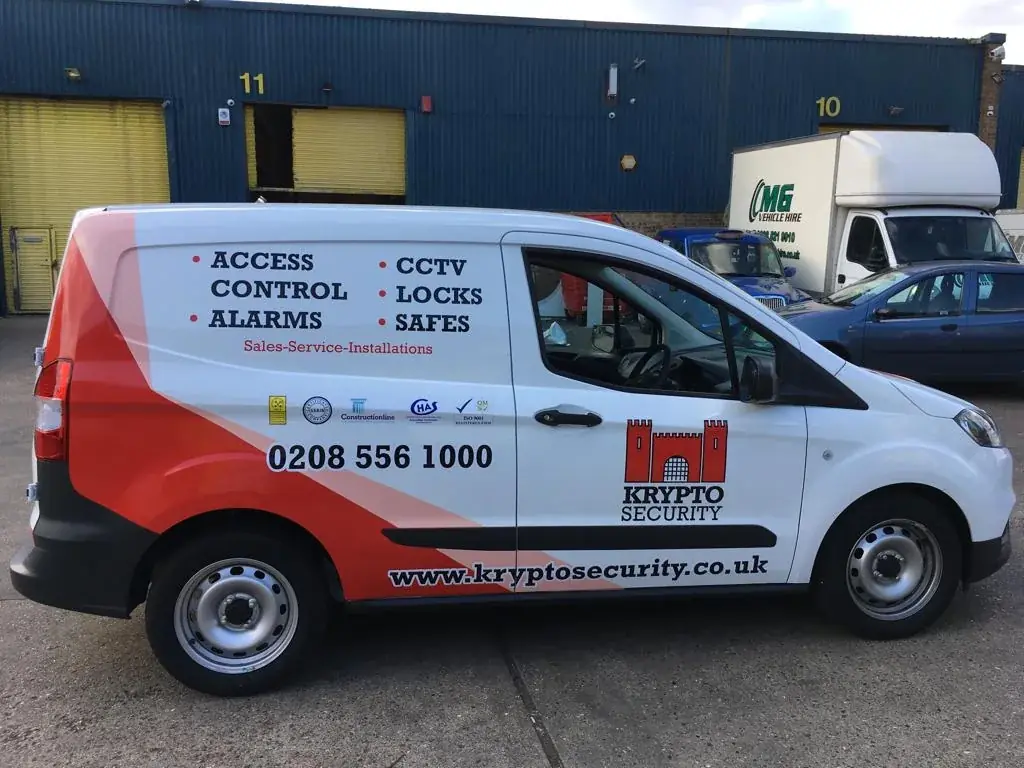
Your van goes to jobs, suppliers and streets where new customers may see it. A clear name and a few useful details can help people remember your business. But a van is not a flat poster: doors open, handles get in the way and the body curves. The design also has to work when the vehicle is moving or parked outside a job. This guide is for London business owners planning graphics for one van or several vehicles. It explains the main choices, what details to prepare and what to ask before the van is fitted. Start with the one thing you most want people to know, then build the design around the vehicle and the way you use it.
Choose how much of the van to cover
The simplest choice is separate letters or a small logo on the side and rear. This can show a business name and phone number without covering much of the van. A partial design uses larger blocks of colour or pictures on selected panels. A vehicle wrap is printed or coloured vinyl, a thin sticky film, applied over more of the vehicle. A wrap can cover a large area, but it needs careful fitting around curves and edges. More coverage is not automatically better; choose enough to make the message clear.
Think about what the van does each day. If it is often parked outside jobs, a list of services or a website may help people learn more. If it spends much of the day on the road, keep the name and main message short. Put important words where a ladder, tool box or open door will not hide them. If you have a few types of vehicle, check how the design can fit each one. The same idea can work across a fleet without placing every detail in exactly the same spot.
Design around doors, handles and curves
A van has sliding doors, seams, handles, windows, lights and curved panels. These can split a word or hide part of a picture. A logo placed over a door join may look broken when the door opens. Small writing low on the body may be hard to see from the pavement. Ask the designer to use the right make, model, body size and year of your vehicle. A picture or drawing of a similar van is a helpful start, but the actual vehicle may have extra rails, windows or fittings.
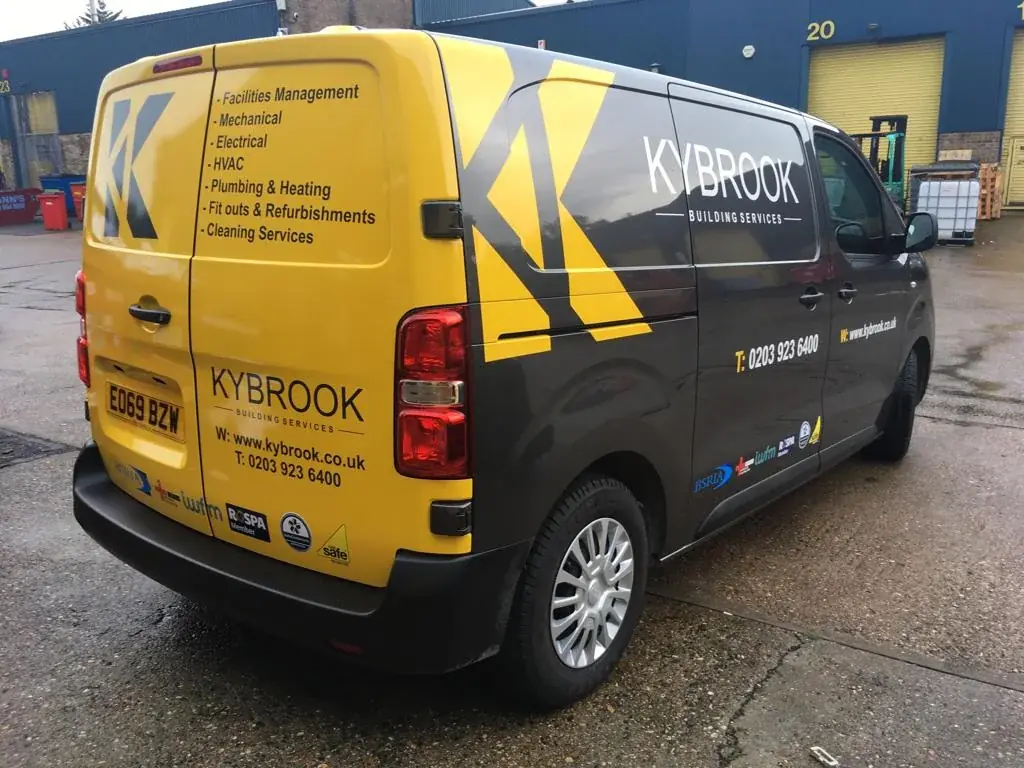
Keep the business name as the clearest part. Add a short line about your work and one way to contact you, such as a phone number or web address. Use colours that stand apart from the paint and leave room around the letters. Ask to see the side, back and front of the van in the design. The rear doors matter too: people may sit behind your vehicle in traffic or see it parked facing the road. The image here shows why it helps to check more than one side.
Get the words and logo ready first
Write down the business name exactly as it should appear. Check the phone number and web address before approving the design. Share a clear logo file and the colours you use on other business materials. Decide whether you need a short list of services, a social media name or a fleet number. Each extra item takes space, so keep only the details that help a customer understand who you are or what to do next.
Tell the sign maker which vehicle you have and send photos of each side, the back and any unusual fittings. Mention if the van is leased, has older graphics or has had paint repairs. These details can affect what can be fitted and how old graphics may come off later. Ask to see a picture of the design on a vehicle shape that matches yours. Check the spelling, size, colours and position before giving approval. Keep a copy of the final design so it can be used if another van joins your business.
Ask about the film, paint and fitting
Vinyl is a thin, sticky sign film that can carry printed pictures or plain colours. Some vinyl is made to follow the curves of a vehicle, while ordinary sign film may be intended for flatter surfaces. Ask which type is planned for your van and why it suits the areas being covered. The state of the paint matters too. Old paint, repairs, wax or dirt can affect how well the film sticks. If paint is loose or damaged, ask for it to be checked before fitting.
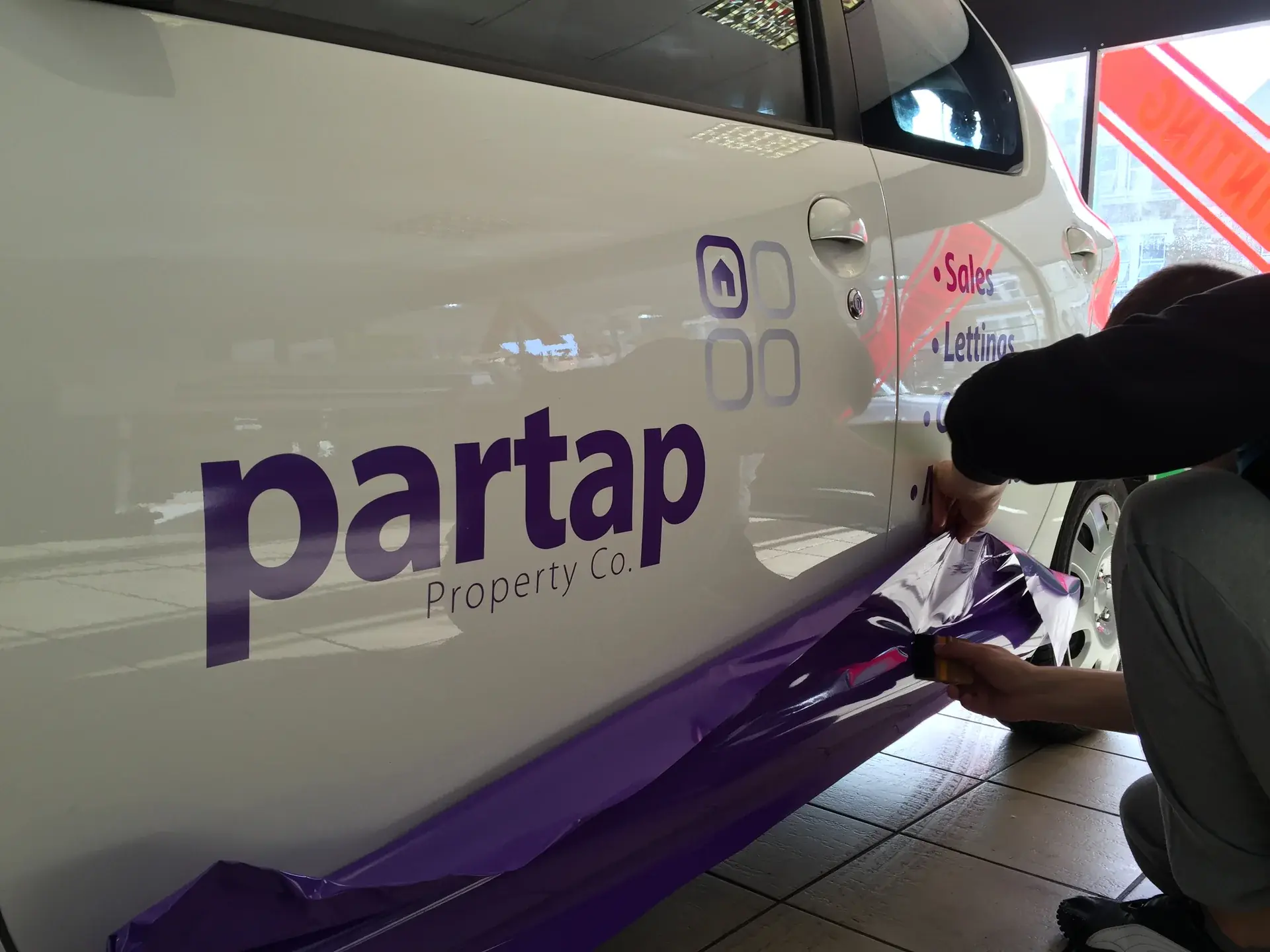
The van usually needs to be clean before the film is put on. Ask where it will be fitted, how long the job may take and when you can use the vehicle again. Check whether mirrors, door handles or other parts need to be removed, or whether the design will be cut around them. The fitter should explain what you need to do before bringing the van in and what care is needed afterwards. The picture of a graphic being fitted shows why a clean surface and careful placement matter.
Keep a matching look across your vehicles
If several people drive vehicles for your business, a shared look helps customers recognise them. Choose the same name style, main colours and short message. Keep a record of the approved design and the colours used. Different vans have different shapes, so the logo may need to move or change size to fit. That is fine as long as the overall look still feels like the same business and important words are easy to find.
Plan which vehicles need graphics and when each can be taken off the road. Give the sign maker a list of the vehicles and their models rather than assuming they are all alike. When replacing a van, check its exact body shape and fittings before reusing the old design. Talk about how long the fitting will take and how much working time you may lose. A little planning helps you avoid a last-minute rush and keeps the fleet looking consistent while new vehicles are added.
Care for the graphics and plan future changes
Ask for simple cleaning instructions that match the film used on your van. Gentle washing is usually better than rough brushes or strong cleaners, but follow the fitter’s advice for the exact product. Take care around the edges, especially if using a pressure washer. Look over the graphics now and then for lifted corners, scratches or damage. If you see a problem, ask the supplier how to deal with it before it spreads or collects dirt.
Your phone number, services or business name may change one day. Before putting new film over old graphics or trying to remove it yourself, ask how it could affect the paint. Sometimes a small area can be updated; other times the whole design needs to be changed. Think about this when choosing how much of the van to cover. A simple design can be easier to update when your business grows or changes its name.
Compare quotes by asking clear questions
A useful quote should make clear which vehicle is included, how much of it will be covered, what film will be used and what fitting involves. Ask whether cleaning, old graphic removal or work around damaged paint is included. Share photos and the exact vehicle details, but expect the supplier to check them before making the film. Do not compare two offers only by how much of the van is covered. The design, materials, preparation and care after fitting all matter.
Ask who will check the final wording and what happens if a van has an unexpected feature. Find out how long the vehicle needs to stay at the fitting place and what care is needed in the first few days. London Signage can discuss vehicle graphic designs and fitting plans with businesses. Share your vehicle details, the main message and how the van is used. Clear answers help you choose an option that fits your workday as well as the vehicle.
Vehicle Graphics London — Review graphic options for business vans and other work vehicles.
Talk about your vehicle — Share the vehicle model and the design you have in mind.
Ask for a vehicle graphics quote — Send your vehicle details and the message you want to show.
Conclusion: let the van carry a clear message
Good vehicle graphics fit the shape of the van and make the business easy to recognise. Choose between a few letters, a partial design or a larger wrap based on the message you need to share. Check how doors and curves affect the artwork, use the right film for the surface and plan the fitting around your work. Keep the approved design so another vehicle can match later, and follow the care advice once it is fitted. London Signage can discuss designs and fitting plans for business vehicles. Before asking for a quote, gather the exact vehicle details, clear photos, logo and main message. With those ready, you can compare choices and pick graphics that work on the road and at the job.
Frequently asked questions
What is the difference between van lettering and a wrap?
Lettering uses separate words or pictures on parts of the van. A wrap uses printed or coloured sticky film over a larger area. The right choice depends on your message and vehicle.
How long does it take to fit van graphics?
It depends on the size of the van, how much film is used and whether the surface needs work. Ask the fitter for a plan after they see your vehicle and design.
Can new graphics go over old ones?
The van needs to be checked first. Old film, paint repairs and dirt can affect the new graphics, so share photos and ask the fitter before booking.
How do I wash a van with graphics?
Follow the fitter’s care advice. Use gentle cleaning and take care around the edges. Avoid rough brushes or strong cleaners unless the film maker says they are safe.