
How Should Business Signage Be Cleaned and Maintained?
A dirty sign, a flickering sign and a loose sign need different responses. Cleaning is appropriate for some surface marks; it will not repair a failing light source or make a moving bracket secure. Start by identifying the symptom from a safe position, rather than treating every tired-looking sign as a wash-and-polish job.
First decision: is this cosmetic, electrical or structural?
- Visible dirt, with no damage or movement: check the material and supplier’s care instructions before choosing a cleaning method.
- Flicker, a dark section or unusual operation: record what happens and arrange assessment by a suitable electrical/signage professional.
- A moving panel, loose bracket, cracking or detached edge: keep people clear of a possible hazard and contact the installer or an appropriate specialist.
Do not climb on improvised equipment to inspect a frontage or open an illuminated sign while it is powered. If there are exposed wires, a burning smell or a suspected falling object, prioritise keeping people away and obtaining professional help. Isolating a supply is only appropriate where it can be done safely by an authorised person.
HSE advice on electrical equipment and installations — Electrical symptoms require appropriate assessment, not opening or cleaning a powered sign.
HSE guidance on working safely at height — Agree safe access with the person carrying out the work rather than improvising a ladder or platform.
Identify what you are cleaning
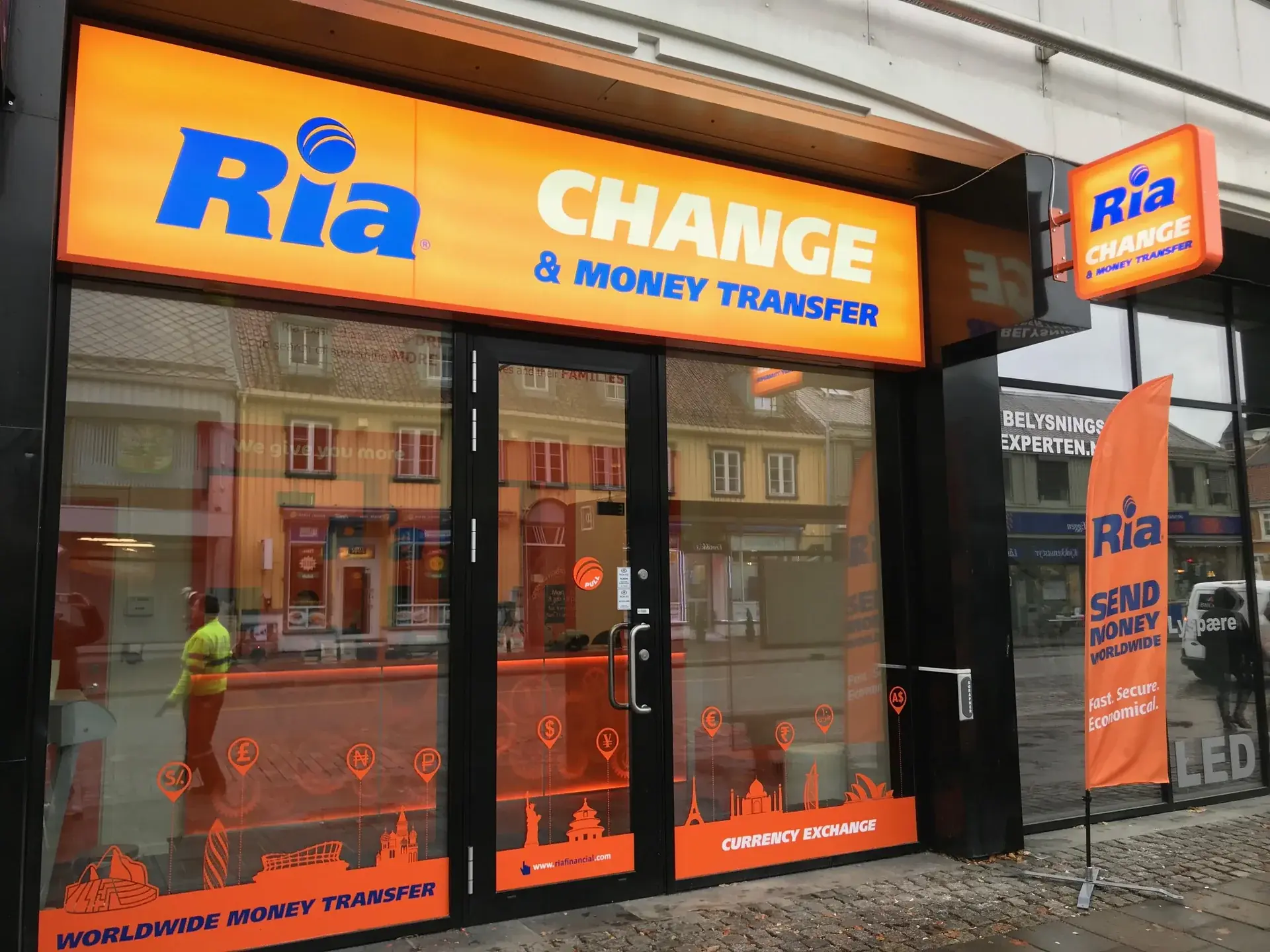
“Shop sign” is not a material specification. A frontage may contain painted metal, acrylic faces, applied film, printed graphics and electrical components. The Ria project photographs show an illuminated fascia, a projecting sign and window graphics together: a useful reminder that one cleaning product should not be assumed suitable for every part of a shopfront.
Ask for the product or finish details and the written care instructions. Where the supplier permits it, a gentle cleaning method may be suitable; aggressive solvents, abrasive pads and high-pressure washing can damage some finishes, films or seals. Do not turn that general warning into a universal cleaning recipe: the relevant manufacturer’s instructions take priority.
Acrylic signs and finishes — Identify the actual face material and finish before asking for its manufacturer-specific care instructions.
Give the person assessing the fault useful evidence
Take a wide photograph showing the affected sign and a closer image from a safe position. For lighting faults, note whether the problem is constant or intermittent and whether it affects the whole sign or one area. Include when it was first noticed and whether work has recently taken place nearby. A short description of the symptom is more useful than guessing which component has failed.
- Which sign or graphic is affected, and where it is fitted.
- What changed: dirt, fading, lifting, cracking, movement or lighting behaviour.
- Photographs and the date of observation.
- Any installation paperwork, product details or previous repair record.
- Access arrangements and who can authorise work or safe isolation.
Keep an inspection record rather than assuming a lifespan
Agree inspection and cleaning arrangements with the installer for the actual position and materials. Exposure, access and the manufacturer’s requirements matter; a generic annual reminder is not a guarantee that every sign remains safe between visits. Keep dated observations so recurring symptoms are visible to whoever next assesses the sign.
The published Ria case study does not report maintenance intervals, service life or repair outcomes, so we do not claim those here. It documents the installation and its components. For care of your own signage, the next useful step is to recover the specification and establish who is responsible for each part, especially when landlord equipment or electrical work is involved.
View the Ria Money Transfer exterior signage and interior graphics project — See the photographed formats; use your own installation paperwork for maintenance decisions.
From the journal
Featured articles
More practical ideas for your next signage project.
More published stories are on their way. Explore the journal for now.