Sign Ideas
Outdoor vs Indoor Signs: What Does Your Business Need?
See why signs outside and inside your business need different jobs, and how to help customers move smoothly from the street to the right room.
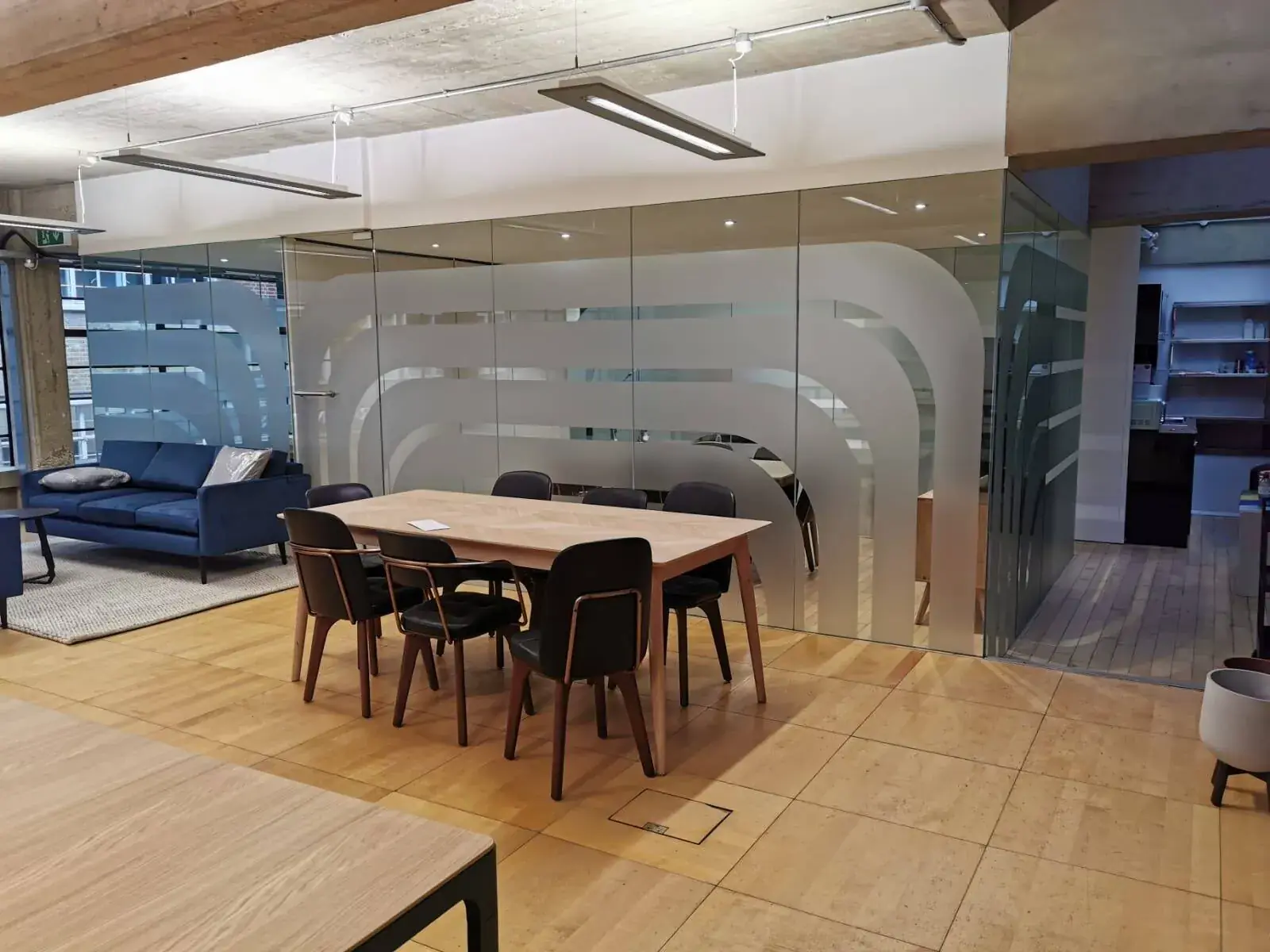
Signs outside and inside a business may use the same name and colours, but they do different jobs. Outside, a sign needs to help someone notice you and choose the right entrance. Inside, it may show where to wait, which room to visit or how a service works. One design copied at every size will not always help with both jobs. This guide looks at what to think about when planning outdoor and indoor signs together. You will see how distance, weather, light, room layout and upkeep affect the choice. Start with the path a visitor takes, and your signs can make the trip from pavement to destination feel simple.
Outside signs have only a moment to be noticed
People outside may be walking past, looking across the road or trying to spot your entrance among several shopfronts. Drivers have even less time to read, so a long message is rarely a good choice for them. Look at the building from the directions people are likely to come from. Notice trees, parked vehicles, street signs and nearby shop names that may block or compete with your sign. Put the business name or a simple mark first, then include extra words only if there is room to read them.
A wide sign above the entrance can identify the whole frontage. A sign that sticks out from the wall may be easier to see along a pavement. Words or pictures on the window glass can share opening hours, but keep the main name easy to find and leave enough clear glass if you want people to see inside. Think about how the sign looks in daytime and after dark if you trade in the evening. The goal is not to shout at passers-by; it is to make your business easy to recognise.
Indoor signs help visitors make their next choice
Once someone is inside, the questions change. They may need to find reception, choose a corridor or check that they have reached the right room. Walk the route as if you had never been there before. Mark the entrance, lift, hallway corners and doors where a person might stop and wonder which way to go. Put directions at those points, not at random spots where they may be missed. Keep names consistent: if a room is called “Meeting Room 2” on the directory, use the same words on its door.
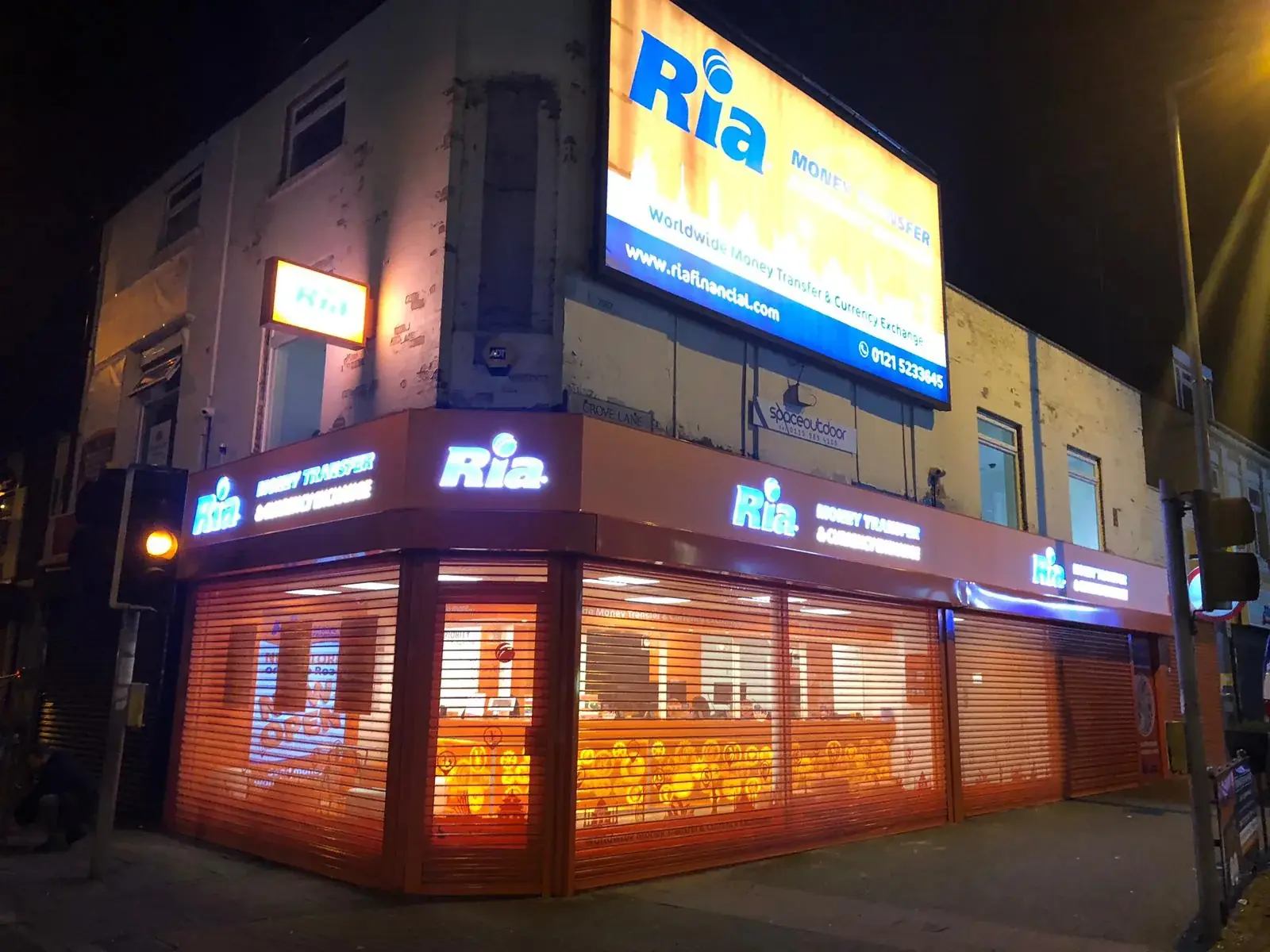
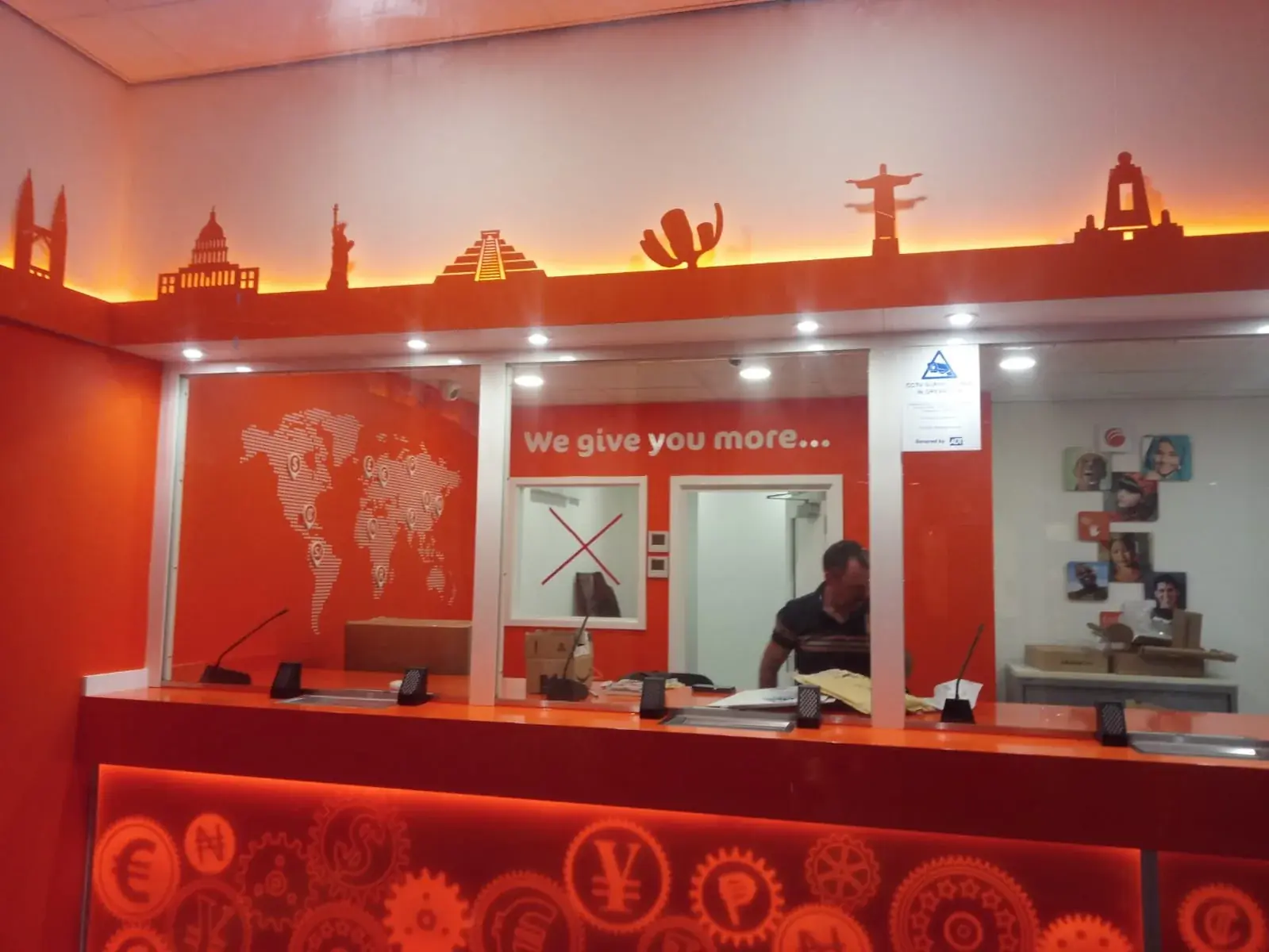
The wide Ria Money Transfer interior in the photo shows how signs and graphics can give a whole room a clear identity. Still, decoration and directions are not the same thing. A large wall logo can make a reception feel recognisable, while a smaller arrow or room name helps people reach the right place. Think about delivery workers and people who use a different entrance too. You can test the plan by asking a colleague unfamiliar with the building to follow it without help. Notice where they pause, then add or move a sign only where it answers a real question.
Choose materials for the conditions
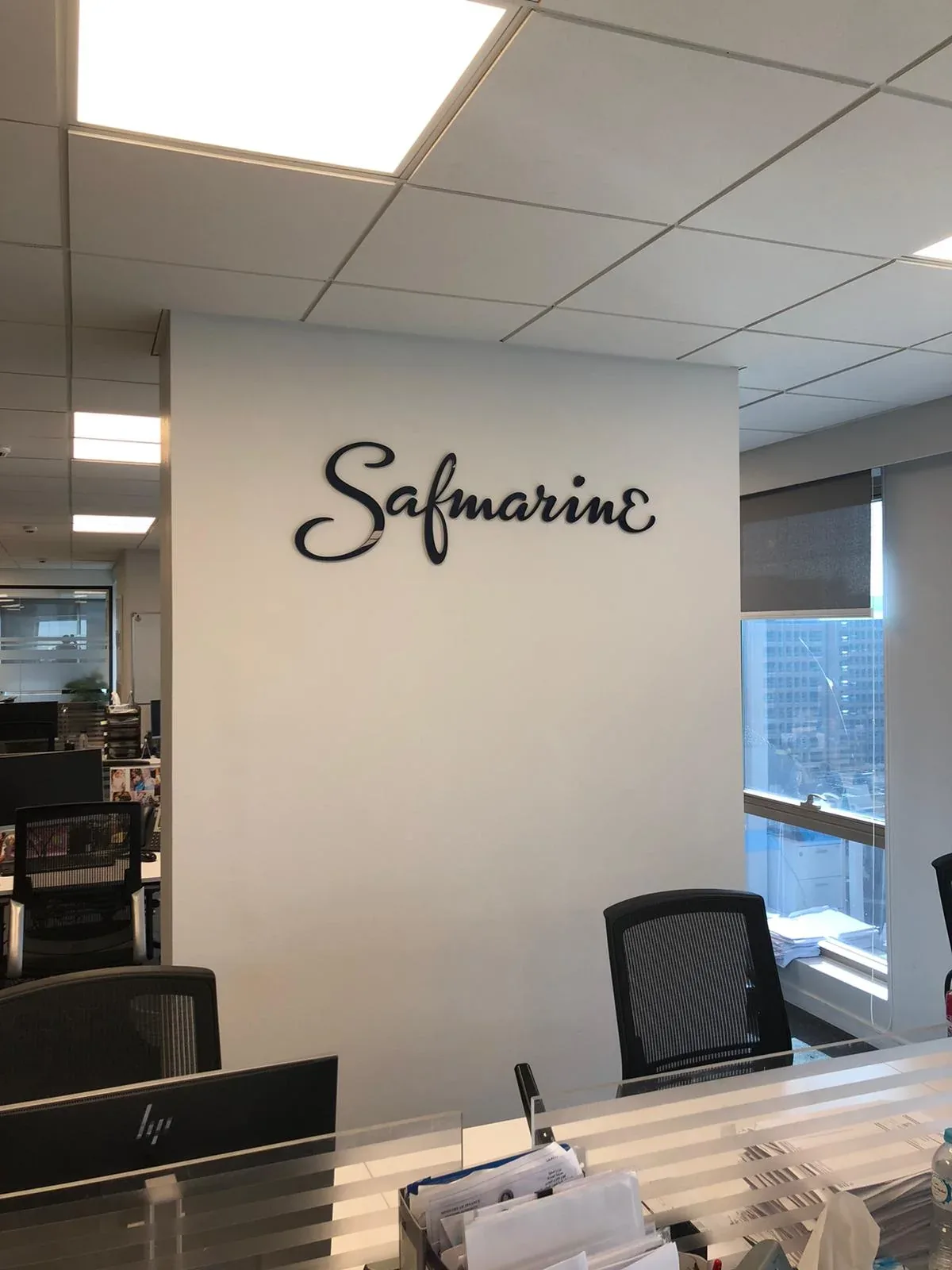
Outdoor signs face rain, sunlight, wind, dirt and changes in temperature. A covered doorway has some shelter; a wall high above the street may face the weather all day. Indoors, there is no rain, but signs can still be touched, cleaned often or washed with products that mark the surface. Sun coming through a window can fade colours, and bright lights can make a shiny sign hard to see. Tell the sign maker where the sign will go and what the wall or door is made from.
Ask why the suggested material suits that spot and how it should be fixed. A name like aluminium or acrylic does not tell you everything: thickness, colour, edges and how it is attached all matter. A smooth panel may be easy to wipe, while raised letters may collect dust around their edges. Ask what cleaning is safe and how the sign can be reached later. Choose for the actual place, not only because a sample looks good in a meeting room.
Use light only when it helps people see
A lit sign can be useful when customers need to find a business after dark, but it is not needed for every location. Check your opening hours, street lighting and how the sign looks during the day. If you are considering lit letters, ask where the power will come from, who connects it and how the parts can be reached if they need attention. These details affect both the plan and future care.
Inside, bright windows or shiny walls can cause reflections. A sign may be surrounded by lots of light and still be difficult to read. Ask to see the design on a photo of the actual wall or window. Compare lit lettering with a dark, clear panel or simple raised letters. The right answer depends on the message, the room and the hours when people need to see it. Look at the sign from where a visitor will stand rather than judging it from close up.
Keep the signs connected but useful
A visitor should be able to tell that the sign outside, the reception and the room labels belong to the same business. Use familiar colours, the same logo and lettering that feels related. The signs do not need to match exactly: the name outside can be large, while a direction sign inside should be simple and clear. Pick consistent names for rooms and services, and use arrows in a way people can follow.
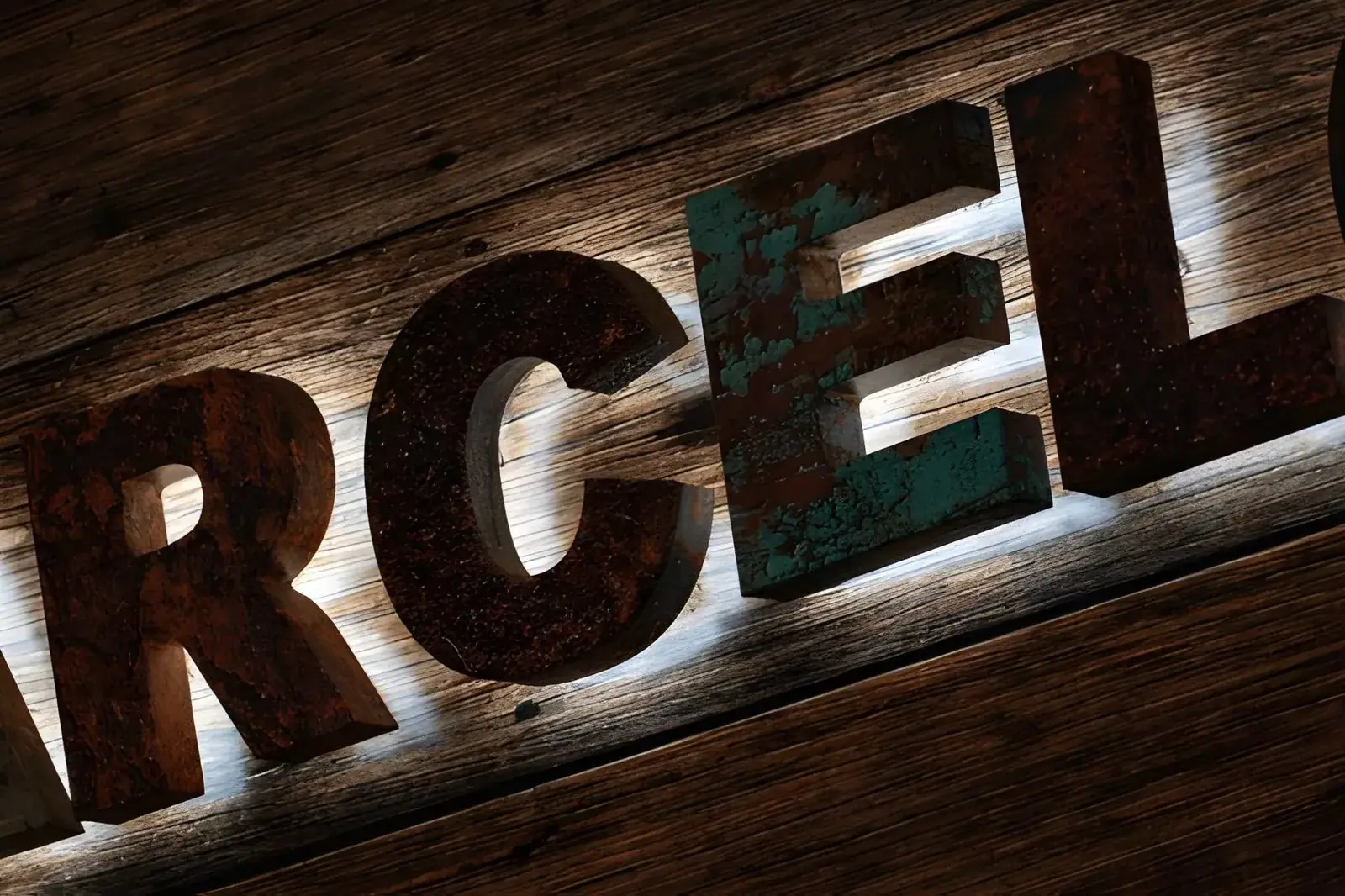
Shared buildings need a little extra thought. People may need to find your business while also reading the building's main directory. Check with the building manager about the names and sign spaces already in use. If a room changes purpose later, make sure you know which parts can be updated without replacing everything. The exterior photo of halo-lit letters shows one way a shop name can stand out against a wall. It can share colours and style with indoor signs, but the inside still needs its own labels and directions.
Plan fitting, care and permission early
Outdoor fitting may need equipment to reach a high wall or a plan to keep a pavement clear. Inside, the work may need to happen around customers, staff or building security. Ask who will arrange access and whether the building owner needs to approve the design. Check how long fitting may take and whether anyone needs to move furniture or close an area. These details depend on the site, so ask the people who look after it rather than assuming.
Think about cleaning and repair before choosing a position. A sign tucked above a high entrance can be hard to reach. Ask what can be replaced if a light or a graphic stops working, and keep the care instructions with your building records. To discuss indoor options, see the interior sign page and share the kind of rooms or visitor route you need to cover. Planning both settings together helps you avoid a bright outdoor sign that leads to a confusing hallway.
Commercial Signage London — Explore sign ideas for rooms, reception and visitor directions.
For advice about a particular building, take photographs from the street and inside, and make a note of the visitor route. Include room names, opening hours and anything the building manager has told you. London Signage can discuss sign styles for the inside and outside of your premises. Get in touch to talk over your ideas or send the details through the quote form.
Contact London Signage — Talk with the team about indoor or outdoor signs.
Ask for a sign quote — Send your site details and preferred sign types.
Common questions
Help people from the pavement to the right room
Outdoor signs help people notice and enter your business; indoor signs help them find their way once they arrive. Plan for both by walking the visitor route and noting what someone needs to know at each stop. Then choose materials, light and sign sizes that suit each location. Keep the look connected, but give every sign a clear job. London Signage can talk through options for a shop, office or shared building. If you are comparing ideas, send photographs and a simple route plan so the team can understand how people use your space. A short route plan is a useful way to begin.
Frequently asked questions
Can I use the same sign design indoors and outdoors?
You can keep the same logo and colours, but adjust each sign for its size, light and location. A big name outside and small room labels inside have different jobs.
Do outdoor signs need lights?
Not always. Think about your opening hours, street lighting and whether people need to see the sign at night. Ask about power and future care before choosing lights.
Which signs should I plan first?
Start with the visitor's route. Make it clear which entrance to use, where to find reception and how to reach the destination. Add a sign where someone might otherwise have to guess.
Do indoor signs need to be hard-wearing?
Yes, choose for how each sign will be used. A door label may be touched and cleaned often, while a high wall sign may mostly need occasional dusting. Ask how to care for the surface.